Day 10 – Desert Castles

Hi Jan – great to have you back – appreciate the comments – thanks!

A leisurely start this morning took us east of Amman. Ibrahim took us firstly to Qasr Al-Kharrana  
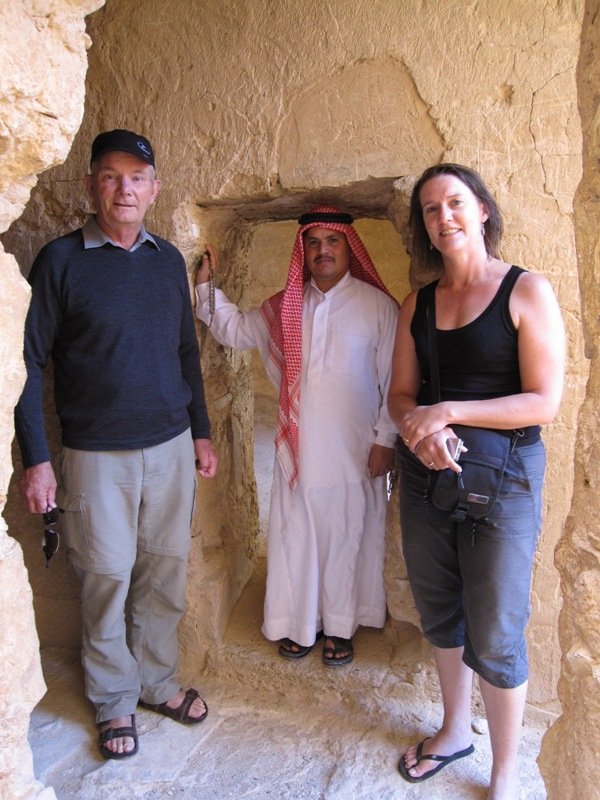
N&K at Qasr Al-Kharannah

– which is not really a true castle but an interesting structure built in the middle of nowhere. The castle is impressive to look at and quite imposing. Approaching from the car park, which isn’t visible from the road, you walk up to the castle – viewing the main entrance as you walk towards it. We met with a guide who took us around the 61 rooms of the castle. He showed us the things that you would have otherwise missed (which proves you should take up the opportunity of a guide when you can). In particular, he let us past an area that had a sign blocking off access to the roof. When we came down, there was another tourist who was looking curiously – our guide told us off and we responded in kind. He later thanked us for playing the game! We enjoyed this castle – the slanted “air conditioning” windows, the old toilet and the general well kept and preserved nature of the place.

As we drove along the highway (which was a long boring drive) we were reading about the Asraq wetlands that are referred to as a “total ecological disaster” – strong words for an area that has been almost completely decimated in about a 40 year period. We went to the Azraq nature reserve – which was practically destroyed by fire about 3 months ago. Needless to say, they can’t really charge visitors to view charred wetland remains – so we paid a donation. The information in the visitors centre was quite informative – and also depressing (347,000 migratory birds in 1967 and only 1200 in the year 2000). There has been (essentially) a double tragedy in this area – and it moved us to think about what might have been.
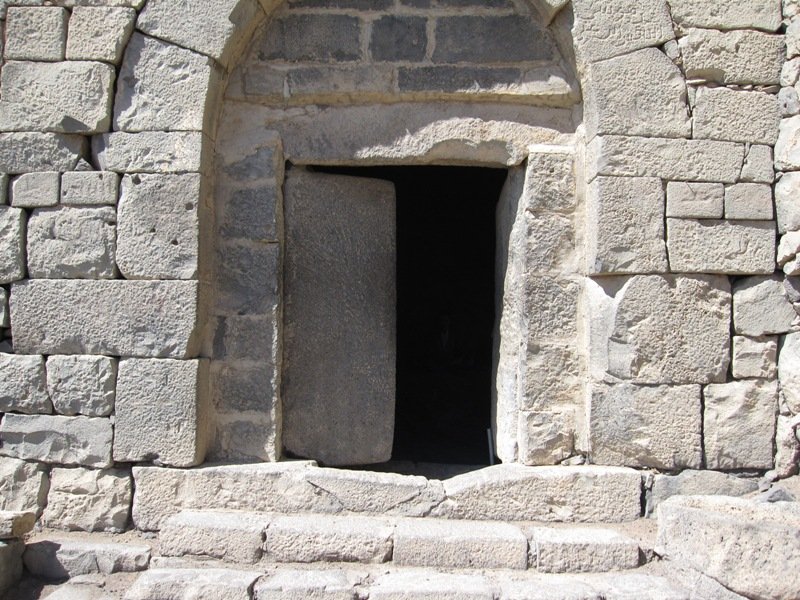
The door at Al Azraq

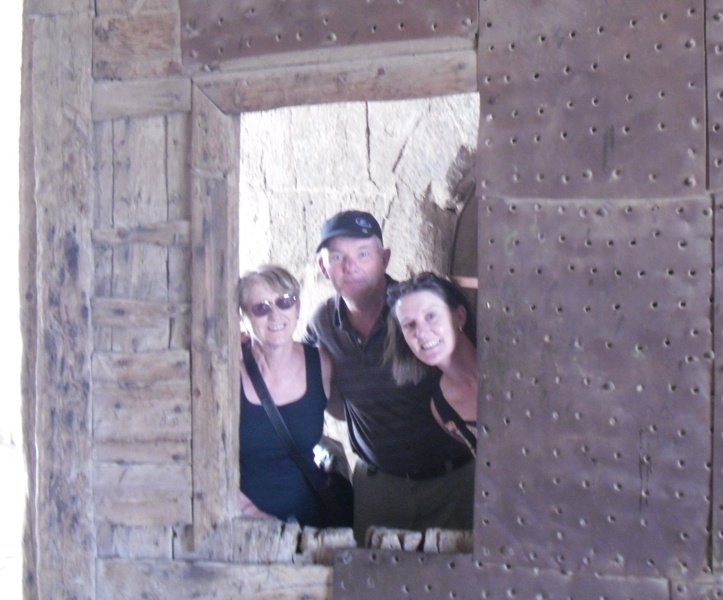
Next stop was the Azraq castle (Qasr Al-Azraq) – where Lawrence of Arabia holed up in 1917-1918.  [They dine out on this all over Jordan!!!] We tried to bypass the busloads of tourists – somewhat successfully, and wandered all over the castle. There are a couple of rooms that would have been as Lawrence of Arabia found them – they were great to see. The main feature of the place (from our perspective) was the impressive stone doors to the place (see the photo on the left). The doors were three tonne hinged basalt doors, installed in Roman times – and still operational.
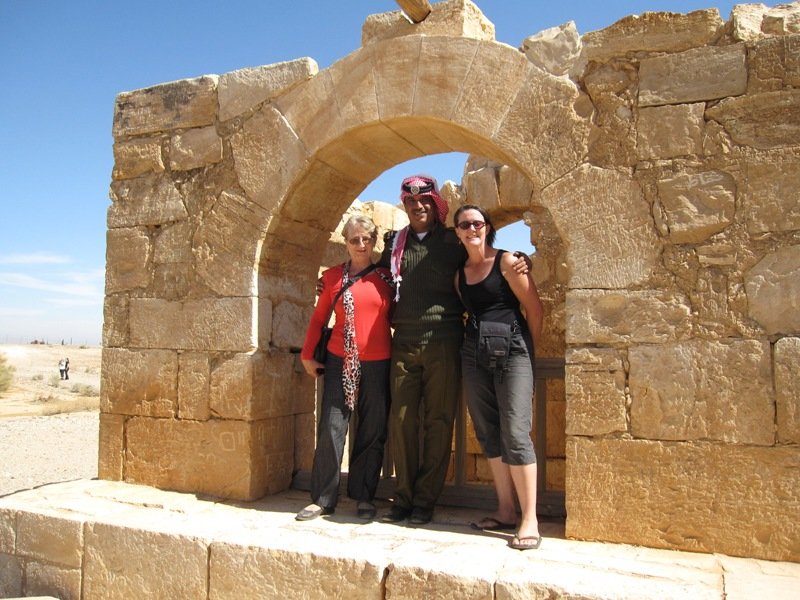
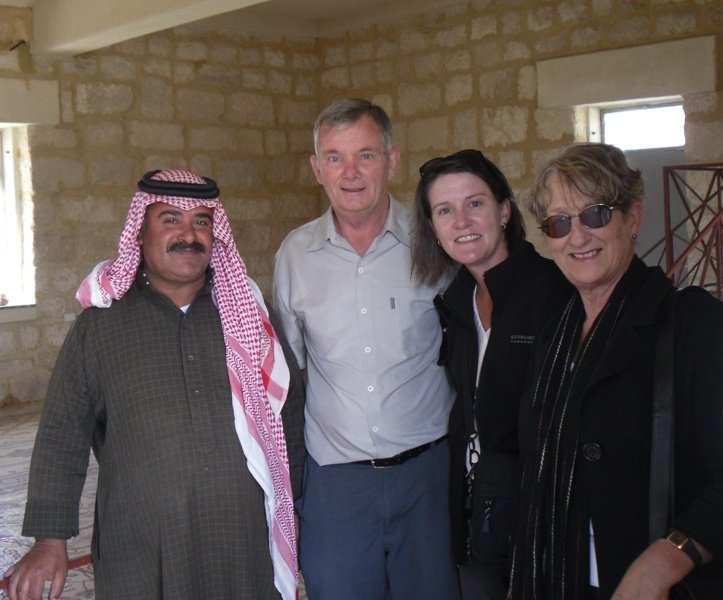
S&K with a creepy uniformed guy

From there we went to Qasr Amra – which is a World Heritage Site. This is a must see on any visit to Jordan – with amazing frescoes within the small palace (built in 711AD). Although it is completely isolated now, it was probably once part of a great complex of buildings that served as a type of country club for the caliphs of the time. The frescoes are particularly risqué, as Islam prohibits any illustrations of living beings. They depict images of musicians, naked dancers, cherubs, baskets of fruit etc. There is also a well outside
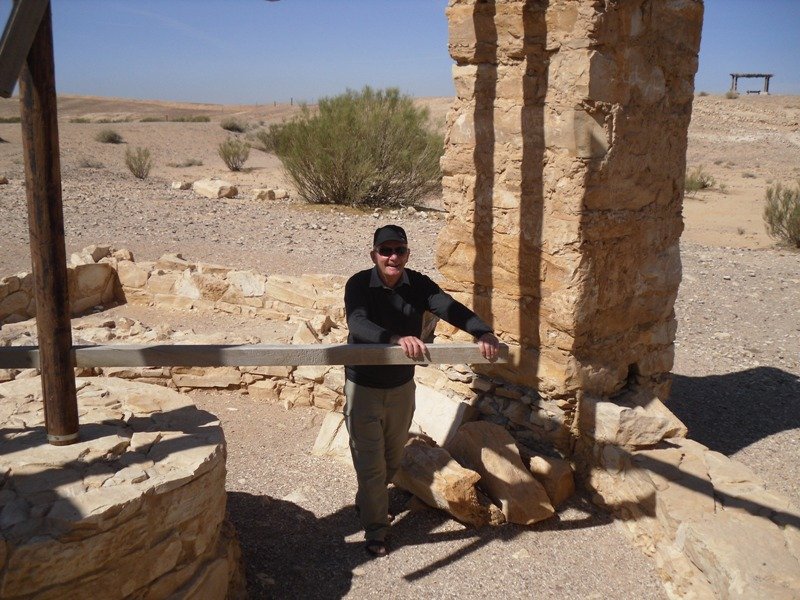
Neil pretending to be a donkey

that goes down about 25 meters and comes replete with a local guy in uniform who seemed slightly over-friendly with the ladies.

After a lunch that was about 3 times bigger than we needed, we moved onto the new city tour. The tour took in embassies and houses of the well to do.

We are chilling tonight – the first opportunity we’ve had to have some decent time to ourselves and to relax in our own way. We’re enjoying it!!!!
Day 9 – Aqaba and the Dead Sea Highway

We had a massive sleep in this morning – which was well needed. Hopefully the blog yesterday made sense – as we were exhausted when we wrote it!

First stop this morning was about 20 metres from the Saudi border, then on  to the Marine aquarium in Aqaba. Lots of very colourful local fish – and a pleasant change to see living stuff…

We took some great photos of the view of Aqaba and Eilat in Israel, then stopped at the museum in the former Sharif Hussein residence – which is one of the better museums we’ve seen. The complex also had the Aqaba fort,

BsKnee at the Aqaba Fort

originally built by the crusaders in the 12th century. Restorations have kept some of the authenticity – notable by the original wooden beams and entrance doors.

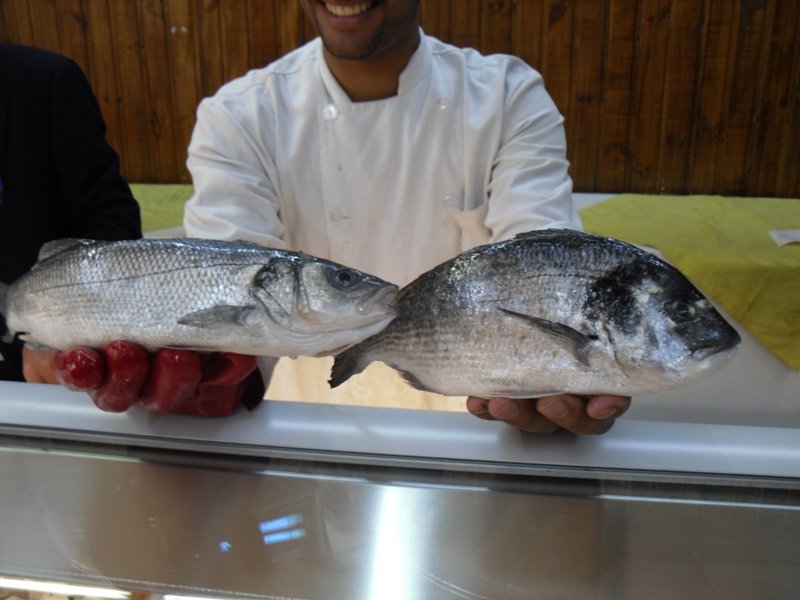
We stopped by the remains of what is believed to be the oldest Christian church, built in the late 3rd century. There isn’t a lot to see but ruins. After a drive around Aqaba, we stopped for a beautiful seafood lunch. We picked whole sea bass and bream and they were served with salads and dips. The meal was very well priced for what we had!

Lunch in Aqaba

The Dead Sea Highway took us all the way back to Amman. We had some interesting stops along the way… One of the things we haven’t really mentioned is how tight security is here. There are checkpoints all over the place: police, army, customs – they just seem to be endless. Our driver got stopped twice today for speeding – one time he was only going 113 in a 110 zone. Some fast talking and mention of a cousin in the police worked wonders. We’ll have to tell the real story when we get home… There is absolutely no corruption or under the table dealings in Jordan – but if you have a cousin, it appears you can get away with almost anything!

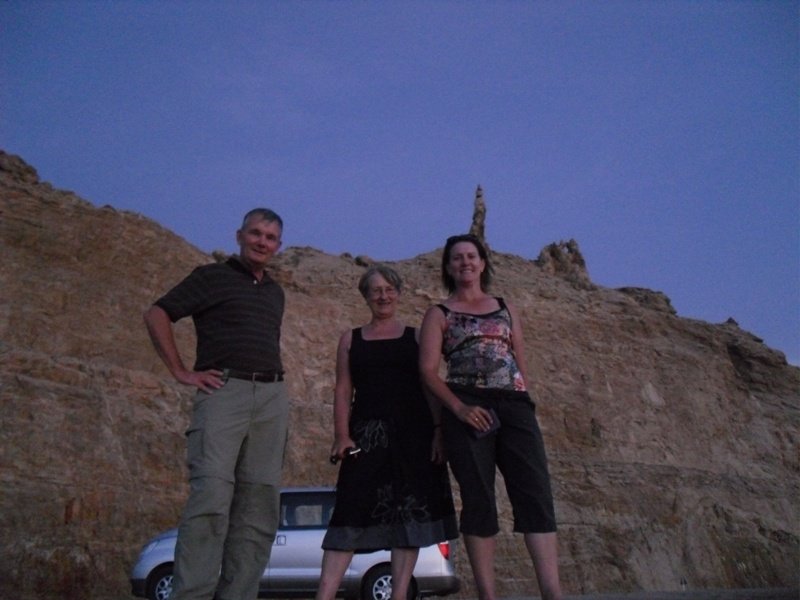
We were going to go up to Lot’s cave (a biblical story about a chap who was warned of pending destruction of Sodom and Gomorrah and fled o a cave with his two daughters) – but it was going to be too dark by the time we did the round trip, so another 295 steps went beckoning… Neil reckons since we didn’t actually see the steps, we didn’t have to climb them! By this stage on the way home it was starting to get pretty dark,

BsKnee with Lot's Wife in the Background

but we still managed to get a cool picture of us with a statue of Lot’s wife in the background (she’s the one who looked back and was turned into a pillar of salt).

At the same place, we could see the effect that the receding Dead Sea has had – with a spectacular view of salt deposits left behind by the receding sea.

We made a silly suggestion to Ibrahim that we would like to pick up some hummus and baba ghanoush on the way home, and ended up being invited to his place in Amman for dinner. Once again, the hospitality was superb – and we just don’t know how we can repay him (with the exception of a decent tip).

Day 8 – Petra Again and Wadi Rum

Neil and Karla got up early again this morning (groan) to finish off the bits of Petra that we still wanted to see.

We hightailed it to the steps leading up to the High Place of Sacrifice and commenced the steep walk upwards. Once at the top (and a long tough walk it was) we saw the two obelisks – so knew we were in the right place. There was not a soul ahead of us – and most of the souvenir shops weren’t even open up the path! We caught our breath and had a leisurely walk around. We finally spotted a lone woman at the top of what looked like a hill and made our way up there.

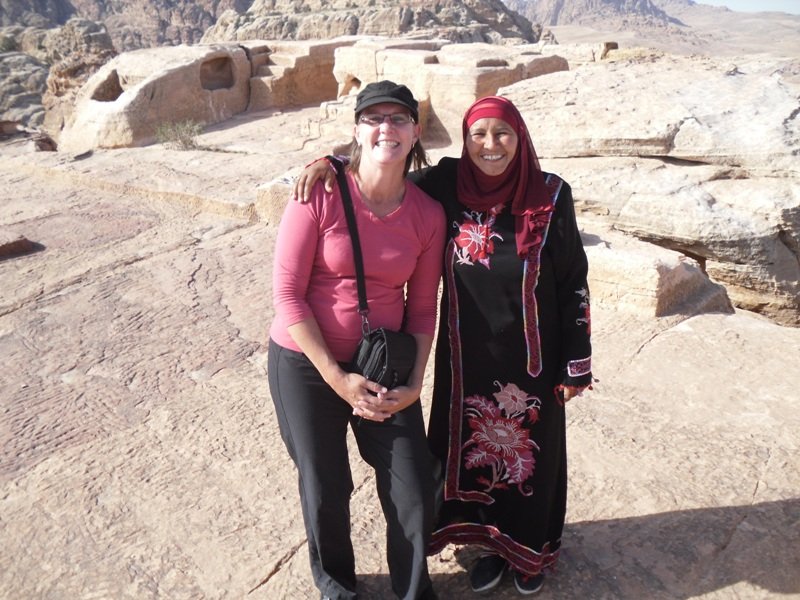
Once we found the High Place of Sacrifice (Al-Madbah), we realised that it was on one of the highest points of Petra. The view was awesome as you can imagine. The lady selling souvenirs at the High Place of Sacrifice

Karla with Local Bedouin Lady

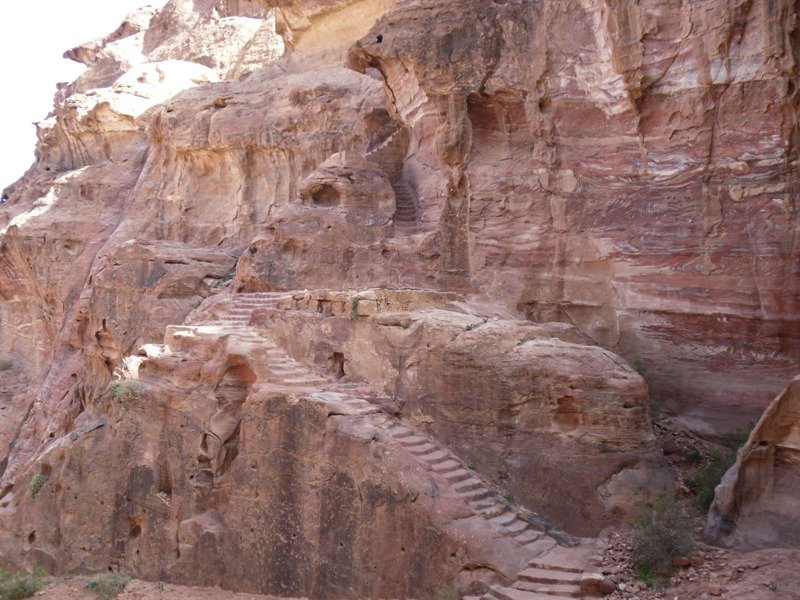
pointed out that there were two altars. She showed us where the goats were sacrificed (cringe) and we could see the channel where the blood flowed down. After enjoying the views, we headed on down the mountain on the main route through to Petra. It was hardly a main route – as we were the only ones on it (barring the locals). We saw a bunch of keys sites on the way down, including: a large carving of a lion that used to have water running over its head; the Garden Hall; the Soldier Tomb; the Coloured Triclinium opposite the soldiers tomb; and the Renaissance Tomb. We definitely rate the Renaissance Tomb as the best tomb we’ve seen – all the others just seem like empty (sometimes smelly) square boxes. The climb down was quite difficult, with tight, narrow winding steps. We’ve included a photo to give you all an indication!

Stairs on the "main route" back to Petra

Then of course, we decided to take a shortcut back to Petra – and nearly came unstuck… we still managed to find a shorter way back to the main road – but it certainly won’t be in any guide book!!!

We stopped at the Treasury along with a billion other people, and enjoyed the thought that we had seen the place with no other people the day before! We had also wandered through the hall behind the entrance yesterday – which was definitely blocked off to all and sundry today!

After a quick trip back to the hotel and once we were clean again, our driver took us to little Petra. As the name suggests, it is much smaller than Petra, and the tombs are older and more eroded. From there it was a mostly uninteresting trip to Wadi Rum.

At Wadi Rum, our driver, Hasan, took us to the Lawrence of Arabia spring (uninspiring), the Khazal canyon (moderately interesting), and some other stuff which we found quite boring. The different colours of the sand was probably the most striking thing about the place – but we could have seen that in half an hour instead of three! It is interesting that this whole area is still dining out on Lawrence of Arabia – many decades after the movie was released! We were glad to be shot of the place. We did however enjoy cardamon coffee and tea in a Bedouin tent – the best part of Wadi Rum.

From there, it was on to Aqaba. Our first impression was of the closeness to Israel, Eqypt and Saudia Arabia (but we’re not going to any of those countries – promise).

Day 7 – Petra!

The early start definitely paid off today – we were some of the first people into Petra – and had the place to ourselves!!!

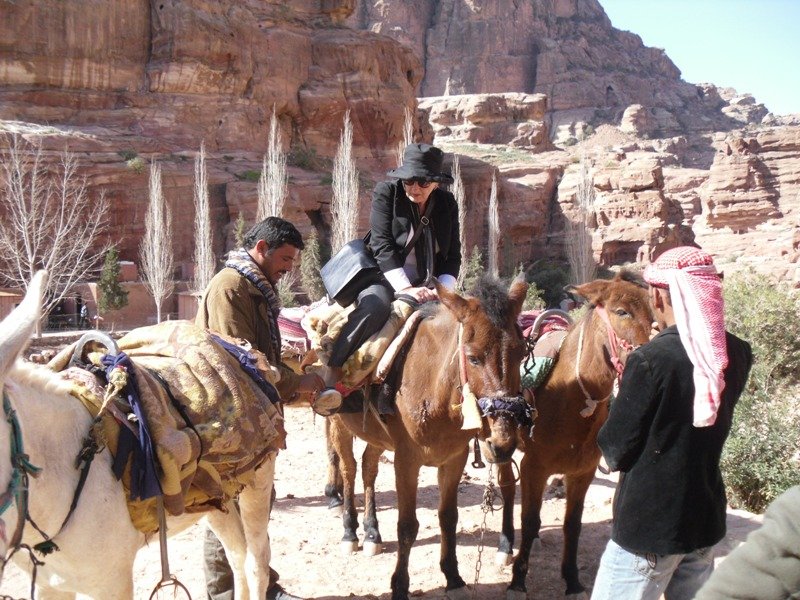
 Neil and Sandra started with a horse ride from the tourist entrance (Karla walked with our guide – Zaid) down to the Siq. We made our way slowly down through the Siq – stopping at various sites of interest that would easily be overlooked without a guide. We learned about how water was channelled and filtered into Petra, saw the crossroads, learned about the gods (with no heads – as they didn’t know what the gods looked like), saw sculptures that would easily be missed, tried some red stone as a blusher and several other things that made the walk enjoyable and stimulating.

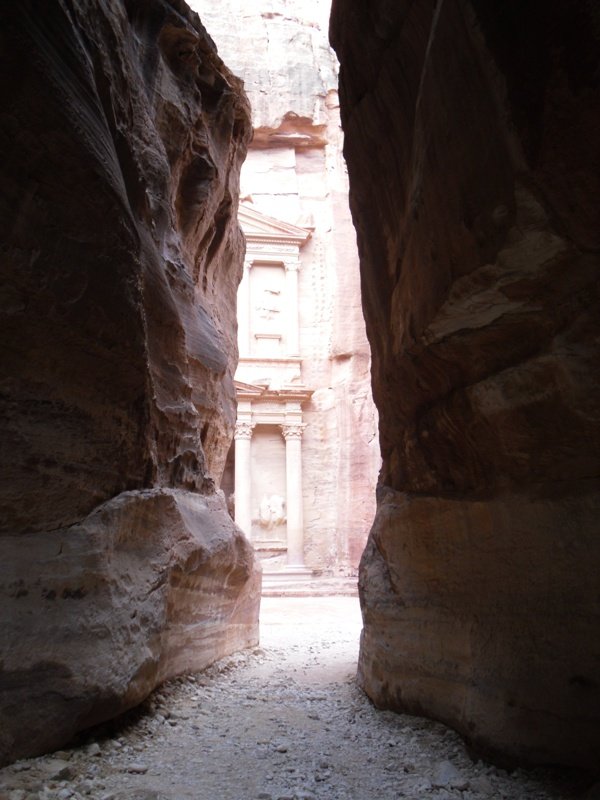
 The first view of Al Khazneh (the Treasury – which is carved out of solid rock from the side of a mountain, and stands over 40

First glimpse of The Treasury

meters high) was as spectacular as you could imagine.

We were the only ones there at around 7.30am in the morning and it was worth the early start. There are some new excavations in the front of the Treasury, which have revealed a couple of tombs that were previously hidden. How on earth they could know to excavate at that particular spot is hard to imagine. From the Treasury we walked down towards the amphitheatre, viewed a few historical sites and then walked up to the urn tomb. A small purchase was made on the way there that made a local man very happy…

Once Zaid bade us farewell, we headed towards the Monastery – which is a site at one of the highest places in Petra. To get there, it is a difficult climb up about 800 stairs (not sure how they counted those), or a comfortable ride on a donkey (so says Sandra). Once there, the view is like the Treasury – spectacular. We wandered around and looked at several tombs, and views of amazing vistas from on high. The walk down was much easier – but it was still difficult, as the terrain is varied, very uneven and covered in donkey poo and rocks.

 We started to see a lot more people – but strangely enough, when we went to visit the Qasr al-Bint (the main template of the Nabatean capital) and the Petra Great Temple there was nobody there. The Petra Great Temple has recently been excavated (so recently, that it doesn’t feature in any guide maps of the area) and was stunning to see. Some of the original (roman?) art work has survived the ages – and

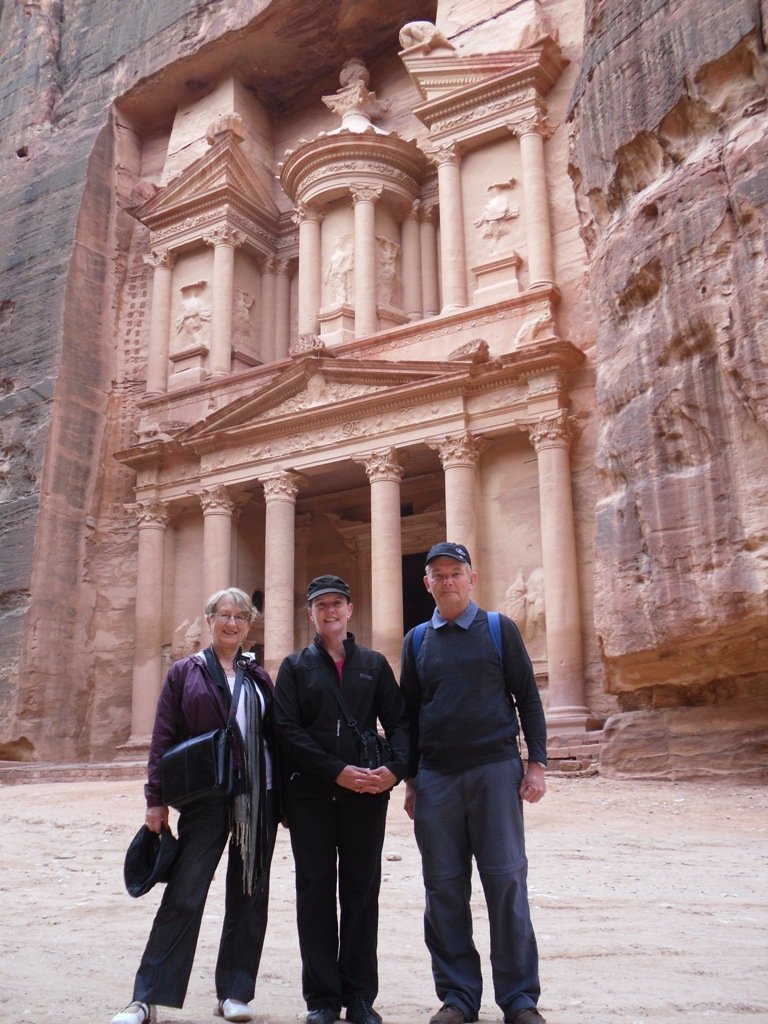
BsKnee outside the Treasury

had been left intact within the reconstructed walls.

 By this stage, we had walked a long way and were getting a bit tired – but we still had about 2km to walk back to the hotel. So, we set an easy pace and eventually got there – 9 hours after setting out this morning!!!

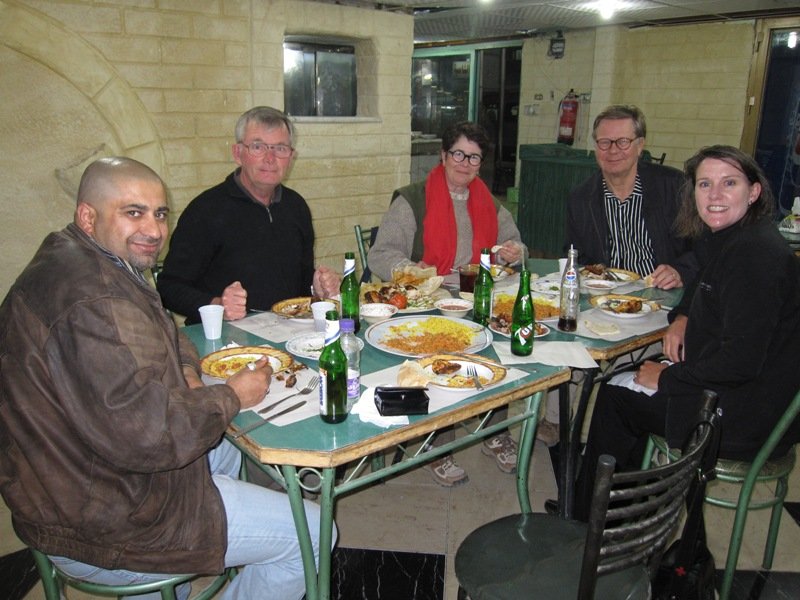
We had arranged to meet our driver in the early evening – and also bumped into some others that we had met on our Bethany Beyond the Jordan excursion (Katherine and Heikki). Ibrihim took us all up to see the sunset over Petra (shame it was a bit hazy), then took us out to tea at a local eating place – where the last photo is from.

Dinner at Petra


 Tomorrow we’re off for Petra round two – then on to Aqaba.

Day 6 – Mosaic’d out, Castle’d out, Blown out!

After the relaxing day at the Dead Sea – today was full on! Our first stop today was Mt Nebo, where the Bible says Moses lived out his remaining days and viewed the Promised Land which he would never enter. It was completely crowded with tourists – so wasn’t really our cup of tea!

Our driver then took us to El Mekhayyat (Al Makhiyt) where the church of SS Lot and Procopius was opened especially for us – and we were able to view a stunning mosaic that was almost intact.

With guide at Al Makhiyt

A feature of this place was the damage caused by fires lit by people cooking and making tea – before they realised that the mosaic was even there! There were absolutely no other people here, aside from us, our driver and the guide. Much more like it!!!

From there, we stopped at a place that makes mosaics and sells other touristy trinkets. Our guide, Hannah, took us through how mosaics are made: both the ‘old’ way and the ‘new’ way (which involves superglue). We wandered around and made a couple of small purchases.

Next stop was Madaba – and we firstly visited the archaeological and folklore museum. Here we saw an old original Madaba house, some more ancient artefacts, and more mosaics. Again, the place was deserted – which suited us down to the ground. The next stop was the archaeological park – which was uncovered recently when some people were doing renovations to their house! What was uncovered was really amazing – a colonnaded street, and yet more mosaics!

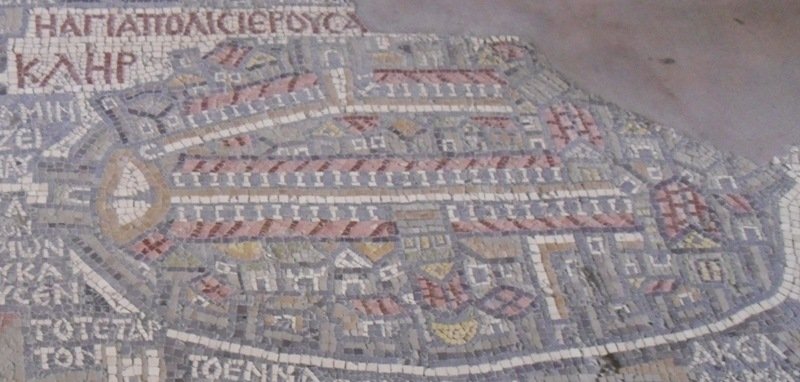
Since we weren’t finished viewing mosaics, we went to the Church of St George church where the most famous mosaic forms part of the floor. The Mosaic Map of Palestine

Mosaic Map

represents the Holy Land and its surrounding regions, and shows a number of key locations mentioned in the bible. We just beat a tourist bus here – so again, we had the place to ourselves. Last stop in Madaba was the Church of the Apostles – which is little more than a very large room with the remains of an impressive mosaic floor, and an over-zealous guide. Once again, our driver stopped on the side of the road saying he would be 30 minutes. He came back a couple of minutes later with some Jordanian bananas (which are very small and our driver calls them “ugly bananas”)!

From there we had a long drive down to Wadi al Mujib – which was one hell of a drop down a steep winding road. There is a dam at the bottom – which our driver told us he had never before seen water flowing over. The views in this area were stunning – the place resembled a huge canyon – we wonder if it was as big as the Grand Canyon?

Wadi Al Mujib

Karak Castle was next on the list – we could have easily missed it – or been blown off the edge. The winds were extreme – and we reckon worse than Wellington on a bad day. It was actually very unpleasant, so we were pleased to join our driver for Turkish coffee at Kir Heres Restaurant (which is mentioned in the Lonely Planet). It also happens to be the only place in town that sells alcohol, so we thought we’d relieve the owner of a couple of bottles of wine!

We drove through yet another steep valley: Wadi Al Hassr. An unusual feature of this valley was a black volcanic mountain which certainly stood out against the surrounding barren, brown countryside.

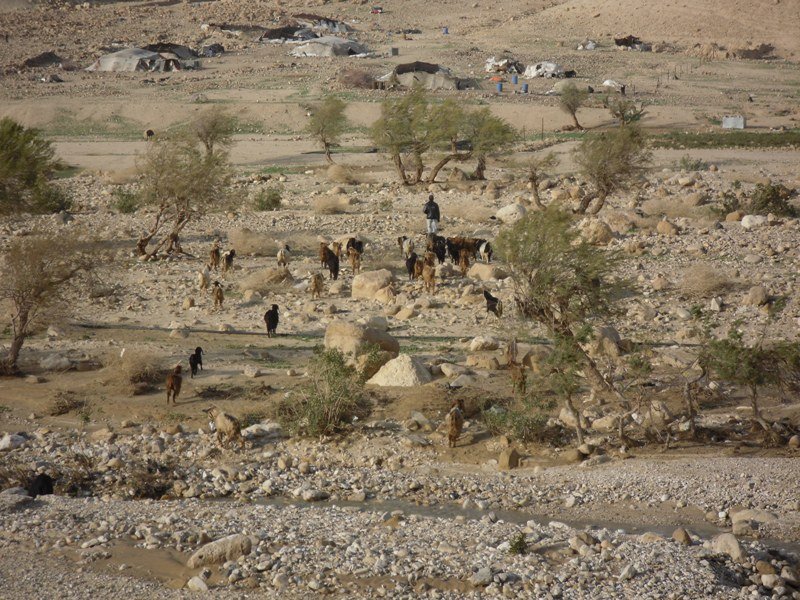
Bedouin Camp

Here, there is a concentration of Bedouin as the government has provided a school nearby.

The last major stop for today was at a bedouin cave (replete with TV and fridge) that has been turned into an antique/souvenir shop. The guy had some really interesting ancient roman coins… Karla was very tempted… but we moved on to the top of Shawbak castle – then headed on to Petra as it was starting to get dark.

By this stage, we were famished, and we asked our driver to take us somewhere local. What we got was a whole cooked chicken (nothing like what you get in a supermarket at home), some salad and the best darn baba ghanoush that we’ve ever tasted! We checked into the hotel – ready for a very early start tomorrow. The aim is to beat the hordes… we’ll just have to see how successful we are!!!

Day 5 – Baptism and The Dead Sea

Firstly, thanks to those who’ve taken the time to post comments – each and every one is fantastic to read when we are so far from home. We wish Jan a speedy recovery – and hope you are able to read the blog soon Jan!!! Also, good luck to Stacee for the touch tournament this weekend – go kick arse!

Today we changed the itinerary – moving the Amman city tour to another day so we could see something not on our planned tour and have more time at the Dead Sea.

While reading the Lonely Planet guide, we were intrigued by the idea of seeing Bethany Beyond the Jordan – the place where Jesus was reputedly baptised. Our driver helped make this change to the schedule and picked us up at a respectable time. The weather in Amman wasn’t the best for taking photos today anyway – but thankfully the deluge of the other day was behind us.

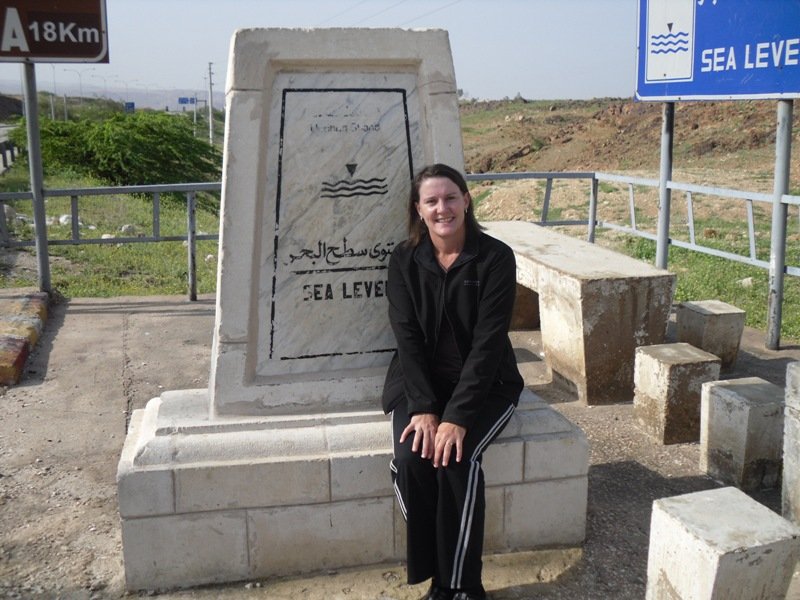
We travelled south, stopping at a garage station – where the driver said he’d be about half an hour. We insisted that he left the keys in the van … just in case. He came back a minute later with these local delicacies – thin biscuits that have a sesame seed topping. They were delicious! On the road, we stopped at sea level – taking the obligatory tourist photos of the signs.

Karla at Sea Level

From sea level down (about 417 meters) we ended up at the Bethany Beyond the Jordan tourist area – which is very close to Israel – so security is pretty tight. Catching an army style van with bench seats was the only way to go, and we stopped at a couple of places to be shown where Elijah went up in the whirlwind, and where Pope John Paul II gave a mass in 2000.

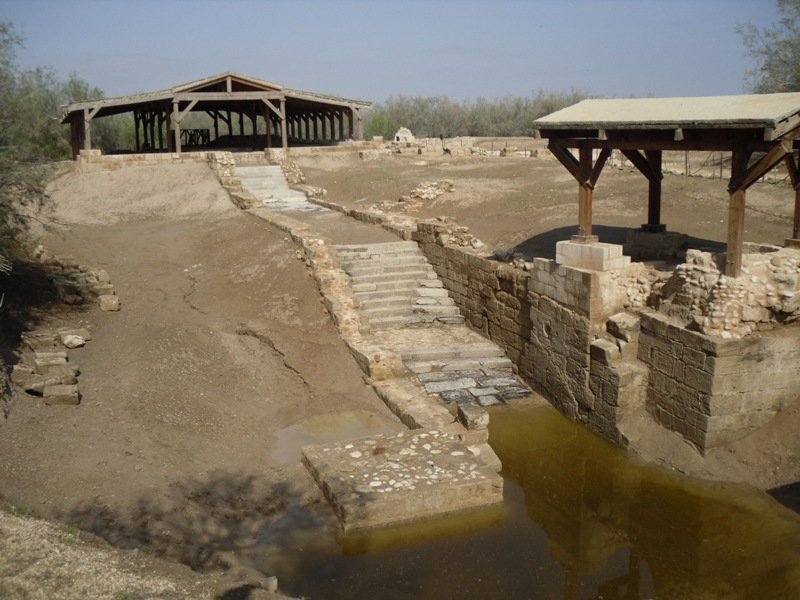
Once we stopped, we walked to a sight of a church with steps down to a trickle of the Jordan river where Jesus was baptised by John the Baptist.

Baptism of Jesus Site

There were actually three churches discovered on the sight – all built on top of each other. The excavations here couldn’t commence until the peace treaty with Israel was signed in 1996 – so it’s still pretty fresh. We walked on, to a modern Greek Orthodox church where baptisms in the Jordan river are carried out today. It is literally a stones throw from Israel (even for someone with a poor arm) – but there are plenty of security guards there to keep you from getting into trouble. The river was flowing today – mainly  because of all the recent rain – but apparently it is little more than a stagnant trickle normally.

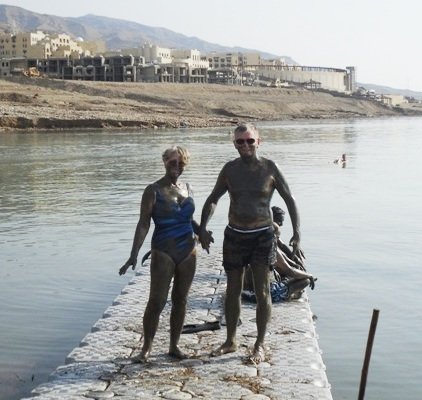
From there, we went to our hotel at the Dead Sea. After a spot of lunch, and a wander over to the Movenpick Hotel to see how the other half live, we had our dip in the Dead Sea. It is all it is cracked up to be – floating without effort and amazingly refreshing. We smothered the obligatory mud all over ourselves, took a couple of happy snaps – and that was another adventure ticked off!

Sandra and Neil with Dead Sea Mud (now 10 years younger)

Day 4 – North Jordan

The first sightseeing-proper day started with a big breakfast to give us the energy we need. We met our driver, Ibrihim and realised pretty quickly that he is a bit of a laugh. He has 6 brothers and 4 sisters – he explains that his Dad had no TV!

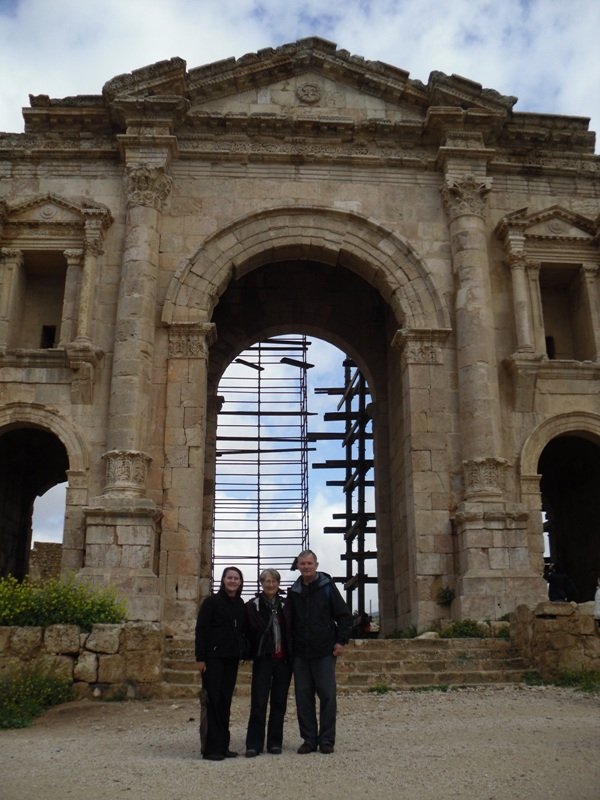
First stop was Jerash, which was seriously impressive. First up, you see Hadrian’s Arch (see the photo of us to the right)

Karla, Sandra and Neil at Hadrian's Arch

– which was a new entrance to the town built to celebrate the visit of Emperor Hadrian in AD129. Going through the arch, you go along a street to the South Gate (the Amman Gate). Through there you end up in the oval plaza – where the roman columns are still standing. Nearby is the South Theatre, which is the largest and best preserved theatre’s (arguably in the world). The acoustics are outstanding – our guide made us stand on a particular spot and talk – it sounds exactly like you are speaking into a microphone! We got interrupted by a couple of local chaps playing the bagpipes – which kind of ruined it for us – but is apparently quite traditional. Sounds like there is a bit of debate over where the bagpipes really originated from!

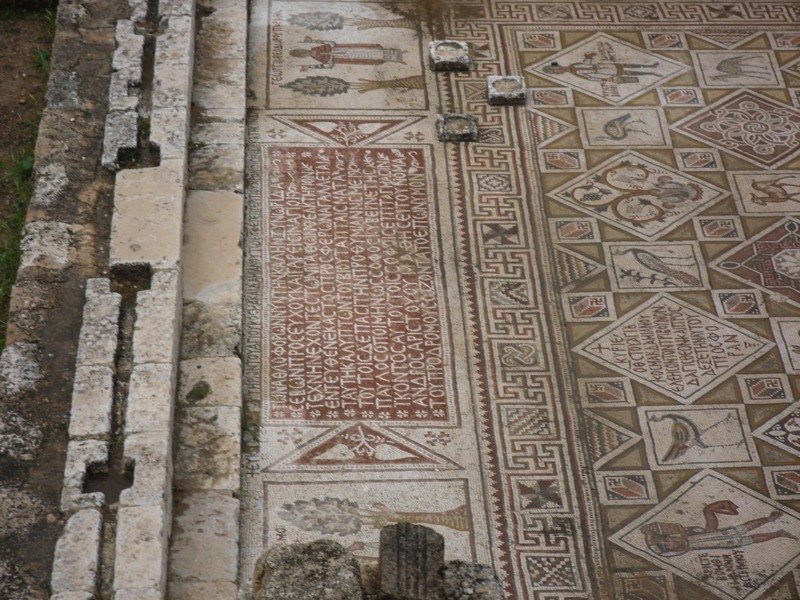
After the theatre, we wandered through the rest of the site. Notable for us was the Church of St Cosmos and St Damianus with an amazing mosaic floor 

The mosaic floor at the Church of St Cosmos and St Damianus

 (consecrated in 533) – with the best preserved mosaics in Jerash; the steps leading to the temple of Artemis that has the original columns still standing; the north-south street with the remains of shops; the old mosaic and pottery pieces everywhere on the ground; and the sheer size of the place. There is a lot still to be excavated – so no doubt there will be more to see in coming years!!!

Unfortunately, at the Hippodrome, the chariot racing was cancelled due to the wet track.

From Jerash we went to Umm Qais – which was terribly overgrown. The main feature was the views over the Sea of Gallilee (Lake Tiberius) into Israel. There was a theatre here too – but unfortunately not a patch on what we saw in Jerash. After leaving Umm Qais, we went a different route, and stumbled upon some farmers with a Nubian goat that had just given birth to a kid about half an hour before we got there!

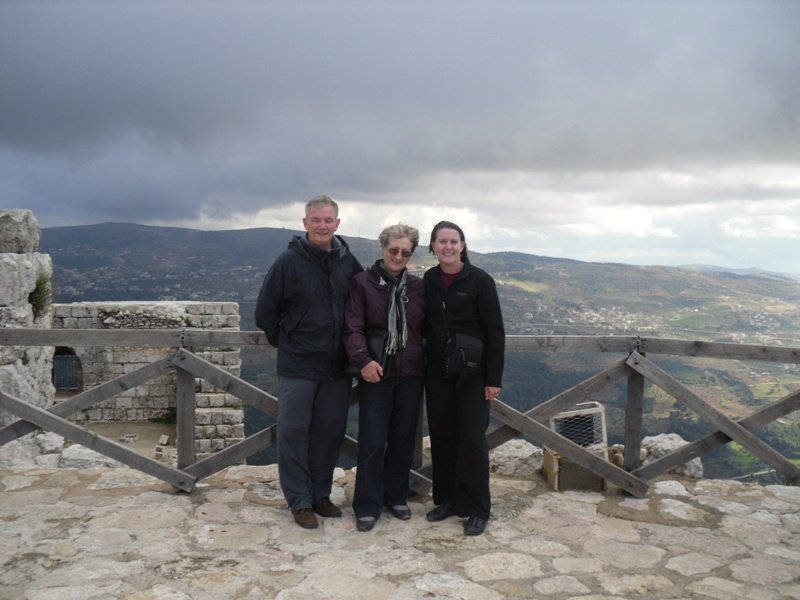
Next, we headed to Ajloun castle (Qala’at Ar-Rabad) – an amazing fortress finished in 1188.

Neil, Sandra and Karla at Aljoun Castle

Then, the highlight of the day – dinner at our driver’s family home in Anjara! We were welcomed by Nefiyah (Ibrihim’s mum), Emman (his wife) and daughters Hyatt and Doonya, as well as his father and a couple of brothers. We had a traditional Jordanian dish called Magloba (sitting around a low table on the floor cross-legged). The dish is baked in a large pan with rice, vegetables and chicken, the turned upside down into a large platter – which we all ate off together along with a salad and yoghurt. The hospitality of the family was sensational – they were not well off – but were still willing to share what they had with some complete strangers. That meal, and the generosity of the family is something we won’t forget in a long time.

Day 3 – To Amman

Last night in Dubai there was an amazing electrical storm… not so amazing being in a vehicle on the road though. The place is just not set up to cope with an extreme downpour – and the drivers certainly didn’t modify their behaviour to suit the conditions!

We rose early this morning and got a Greg Murphy wanna-be to drive us to the airport. We’re sure that even Murphy couldn’t match his time… We had no hassles checking in, and jumped on the plane to head to Amman, Jordan.

When we arrived in Amman, there were black clouds looming on the horizon – and they made themselves known when we were travelling in to the city. We actually got an incredible amount of hail and the temperature turned considerably downwards from the time we landed to arriving at our hotel.

We checked in, and despite the torrential rain, decided we had to venture out. We got a friendly taxi driver who spoke sort of passable English, and he took us to the Citidel. It seems that most of the road rules are quite optional here: indicators, staying in a lane, observing red lights, talking on cell phones, speed limits – that just about covers it!!! The weather probably didn’t help – but it was just complete carnage on the roads. Closing your eyes is certainly recommended…

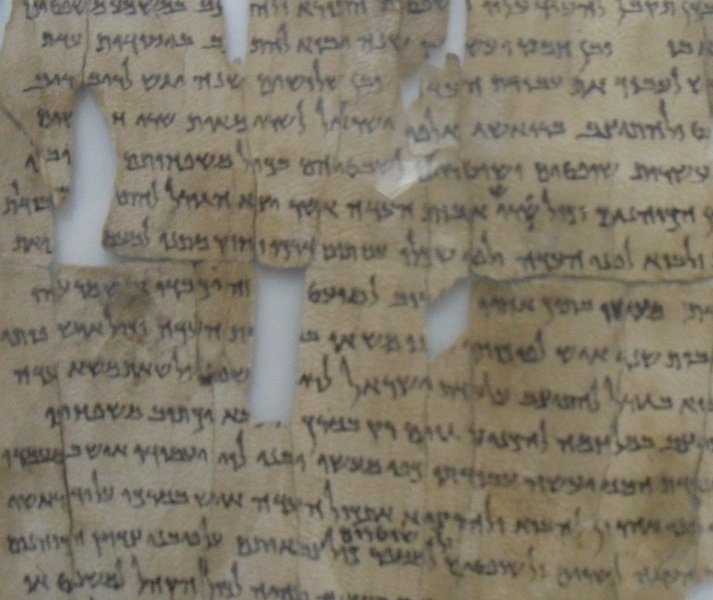
The Citidel is just as impressive as it looks in pictures… we went straight to the National Archaeological Museum – as we are coming back to the Citidel as part of our organised tour. There we viewed the Dead Sea Scrolls,

A piece of the dead sea scrolls

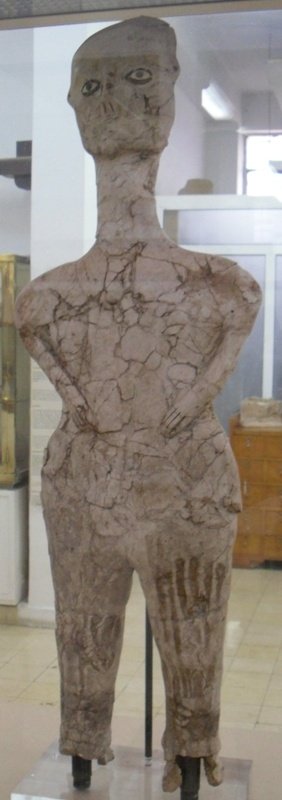
the Mesha Stele, and the Ain Ghazal statues. What struck us, is that these things are “seriously old” (just for you Stacee). The Dead Sea Scrolls are believed to be the oldest written word ever found. They date back to the third century BC. The Mesha Stele we saw is actually a copy (the original is in the Louvre in Paris) and preceeds the bible as an account of the history of Jordan and Palestine in the 1st millennium BC. The Ain Ghazal statues

One of the Ain Ghazal statues

date back to 8,000 to 6,000 BC.

From there we visited a large mall in Jordan – we needed some time to get out of the rain and dry out!

We’re off on the organised part of the tour in the morning – so we’ll definitely have more history to share tomorrow.